Teach genocide!
Teach genocide!Teach genocide! Kurdistan and Hayastan - Hand in Hand

Saturday, June 30, 2007

Songwriters used to be poets!

Yunus Reuf and Mikael Nalbandian

The kurdish and the armenian national anthems does not have the same structure but the context is the same; nationalistic, loud and proud!
The authors of the anthems is both poets, Mikael Nalbandian (1829-1866) was a writer that was largely self-educated wrote the the armenian national anthem Mer Hayrenik (Our fatherland) and Dildar (real name was Yunis Reuf) was a poet studiyng law in Kirkuk that wrote the kurdish national anthem in 1938 in a prison in west Kurdistan (iranian).

Sivan Perwer singing Ey Reqib

Ey Reqib (Hey Enemy!)

(LISTEN, CLICK HERE)

Hey enemy, the Kurdish nation is alive with its language
Can not be defeated by the weapons of any time
Let no one say Kurds are dead
Kurds are living

Kurds are living, their flag will never fall
We are the children of Medya and Keyhusrew
Both our faith and religion are our homeland
Both our faith and religion are Kurd and Kurdistan

Let no one say Kurds are dead
Kurds are living
Kurds are living, their flag will never fall
We, the youth are the red colour of the revolution

Watch our blood that we shed on this way
Let no one say Kurds are dead
Kurds are living
Kurds are living, their flag will never fall

Elder people singing their national anthem Mer Hayrenik

Mer Hayrenik (Our fatherland!)
(LISTEN, CLICK HERE)

Our fatherland, free and independent,
That has lived for centuries
Calls on its children now,
Free independent Armenia.

Here brother, for you a flag,
That I made with my hands
At nights I did not sleep,
I washed it with tears.

Look at it, in three colours
It is our gifted symbol.
Let it shine against the enemy.
Let Armenia always be glorious.
Everywhere death is the same
A man will only die once
But fortunate is he
who dies for the freedom of his nation.

Thursday, June 28, 2007

Calouste Gulbenkian - Armenian oil driller in Kurdistan

A big man in the history of oil drilling internationally is the armenian man Calouste Gulbenkian that played a major role in the oil drilling in the middle east, he was a famous philanthropist and businessman (1869-1955)

Four books is written about Calouste, but only one of them was published before he oil drilled in south Kurdistan, in the oil drillers paradise, the heart of Kurdistan... Kirkuk!
A large oil reserve was discovered in the Baba Gurgur region wich was provided the impetus to conclude negotiations and in July 1928 an agreement was signed which determined which oil companies could invest in TPC and reserved 5% of the shares for Gulbenkian.


He discovered that Kirkuk floated on black goald and that the city had one of the richest oil fields in the world in 1927, black crude and gas gushed violently to the surface with a thunderous sound. Then the government of Iraq started to taking control over Kirkuk, moving out kurds and movin regime royal arabs.
Kirkuk soon became a major oil town.

Gulbenkian was worth between 500 million $ - 850 million $ in his time.

Saturday, June 23, 2007

Monte Melkonian


Monte Melkonian was born in California where he also studied, and was killed in 1993 by the by Azerbaijani troops in the village of Merzuli in Nagorno Karabakh, he was a famed Armenian military commander in the Nagorno-Karabakh conflict.
He had several contact with Kurds and personally said:
"we need to build a mass-based guerrilla force closely aligned with Turkish and Kurdish revolutionaries"

Monte Melkonian, a third-generation Central Californian, was a trained archaeologist who spoke eight languages.
He found his way to Iranian Kurdistan, where Kurdish partisans made a deep impression on him. Years later, in southern Lebanon, he occasionally wore the uniform of the Kurdish peshmerga which he was given in Iranian Kurdistan.
In Iranian Kurdistan he witnessed the disciplined Kurdish peshmerga rebels, there in Kurdistan, he participated in the guerrilla resistance in mountainous Kurdistan, this was why he could speak some Kurdish.

The inmate on the left wearing dark glasses is Mehmet, a Kurd from Turkey together with Monte Melkonian to the rigth in a prison in France.

His friends at different times included Communist intelligence agencies, Palestinian terrorists, Kurdish Marxists and dithering Western intellectuals


Friday, June 15, 2007

Taner Akçam


The most famous scholar that stands up for the armenian and kurdish population with turkish extraction is the historian, author and sociologist, Taner Akçam.

Professor Taner Akçam was arrested for his involvment in a journal on the turkish treatment of the kurdish minority and recieved a sentence for 10 years in prison for this.
Mr Akçam was declared a prisoner of conscience by Amnesty International in 1976, he fled Turkey and was eventually granted asylum in Germany.


Taner Akçam is today one of the first turkish academics to acknowledge and openly discuss the armenian genocide. Taner´s interest for the denial is his reason for working in th
Center for Holocaust and Genocide Studies at the University of Minnesota.


Kurdistan and Hayastan has edited a video with selected clips on Professor Taner Akçam

Tuesday, June 12, 2007

Carl Von Linné - honoured by the Armenian culture


Gayane is a four act ballet and with music composed originally from 1942.
Gayane is also the name of an Armenian dancing group in Uppsala, a city close to Swedens capital Stockholm in Scandinavia.
The members of the dance group Gayane is
This dansgroup danced (on 3th juny) in tribute to the Swedish zoologist, physician and world famous botanist Carl Von Linné on his 300th birthday.
Carl was going to be a priest but did not do so well in school so his interest in botany got him to study, he is thought of as one of the fathers of modern ecology.

T
he Uppsala Armenian Cultural Union's Gayane dancing group headed by Armine Zakinian and also choreographed the play including ballet and other genres, the play was called (translated from Swedish) "An fragrance from Armenia to the garden of Linné".

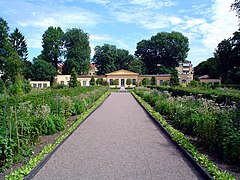
Linnéträdgården / The Garden of Linné

In the first part of this play, crane´s fly from Armenia to Sweden in to Mr Linné´s garden where they dance. Later on in the play, the Gayane dancegroup displays traditional folkdance, modern and classic dances from Armenia.

Monday, June 11, 2007

Little Kurdistan - Little Armenia

The name "Little Kurdistan" comes from the large number of Kurds that lives there in Nashville Tennessee where the Kurds is estimated to be 10 000 of the population with more than 5 000 families. The Kurdish population in Nashville is mainly from southern Kurdistan and is very aware of their herritage

The Kurds appreciate the citys Bible belt they live in because they find the traditional christian family values similar to the traditional Kurdish family values.

There are also smaller communities in Texas, Virginia and Maryland. Canada is also the home of Kurdish communities located in Toronto, Ottawa, Calgary and Hamilton.


"Little Kurdistan" is the largest Kurdish community in the US wich became appreciated by the government when they recruited Kurdish immigrants to work as translators for the army troops during the war in Iraq.
One of Little Kurdistan´s institutes and organisations is the Kurdish Youth Club, Salahadeen Center and the Kurdistan Cultural Institute of Nashville.


The name "Little Armenia" comes from the large number of Armenian population that lives there in Glendale, California. many Armenians run their stores and businesses here and they opened up in 1990.
We can find the Armenian church St. Garabed (Armenian Apostolic) Church here, builted in 1978 (!) and the Rose and Alex Pilibos Armenian school wich is an Armenian-American school with a large number of Armenians from Kurdistan, this school was first known as the Hollywood Armenian School and the Armenian history, religion and language classes is taugth in Armenian.


The biggest event in Armenia is also the biggest event in Little Armenia, crossing the Black sea, Mediterranean sea and the North Atlantic ocean from Armenia to USA and the major event is still the protest for a recognition of the Armenian genocide on April 24th.


In Fresno, Californa there is a region called The Old Armenian Town wich is a former enclave of Armenian immigrants and is currently beeing redeveloped.

Tuesday, June 5, 2007

Kurdish and Armenian Genocide

This is a Speech given by Ara Alan, Secretary General of Kurdish Youth Club in Atlanta (USA) in remembrance of th 92nd anniversary of Armenian Genocide by the Ottoman Turks.

This speech was given in Georgia State Capitol building addressing Armenian Americans, Senators, Congressmen, sheriffs, Judges and representatives of Mayor of Atlanta, and Georgia State Governor.

Friday, May 18, 2007

The Yezidi Kurds in Armenia

Yazdanism is misunderstod and the believers of this faith is often called "devil worshippers" wich is wrong because of Yazdanism´s name for the central figure of their faith, a Peacock named Melek Taus is compared to the devil by some Christians and Muslims.
The Yezidi Kurds beliefs that God created the world and that Melek Taus is God´s angel, that is why it is very wrong that others identity Melek Taus as Lucifer or Satan.

Islam does not recognize Yezidism as a religion and the negative view of Muslims with regard to the Angel Peacock who in the religion of the Yezidis is second only to God has been the cause of conflict between Muslims and Yezidis for thousand years.

The Yazidis consider Melek Taus to be a benevolent angel that has redeemed himself from his fall and has become a demiurge who created the cosmos from the Cosmic Egg. After he repented, he cried for 7000 years. His tears filling 7 jars, which then quenched the fires of hell.

Resulting from persecutions was the migration of the Yezidis to Transcaucasia in mid 19th and later early 20th century to Armenia.
The word Yezidi was used to qualify the nationality of many Yezidi Kurds.
The Armenian government refused to change their passports and this of course causes many international difficulties because almost all Yezidis consider themselves Kurds.


One of the Yezidi Kurdish community is in Armenia and is estimated to be 40 000 or more and
the Yezidis speak Kurmanci wich is a Northern-Kurdish dialect.

One of the first Yezidi intellectuals in and Member of the Parliament of the First Armenian Republic the well known amoung Yezidi Kurds, Mr Usub-Bek.

In the year of 1920, the first school for Yezidi children were opened and later on the first ABC book was published in Armenia.

"Denge Ezidia" (The voice of the Yezidi) was the first Yezidi radio show and was broadcasted and established at the Armenian National Radio.

This became a success for the Yezidi Kurds and draw much attention.
Later on a Kurdish broadcast emanated from Yerevan on called "Radio Erevan" and the newspaper "Riya Teze" was published also in Yerevan in Kurmanci.

Yezidi Kurds

The Yezidi Kurds of Armenia has many timed stood up for Armenia and showed patriotism particular during the Ngorno-Karabakh conflict against Azerbadjian when many of their volunteers spilled their blood in the defense of Armenia.

Saturday, May 12, 2007

We remember Karapete Xaco

Karapete Xaco was an talented Armenian man and the best Kurdish singer in Armenia, this great man is no longer with us and died by age, in the year of 2005.

Karapete Xaco was born 1902 during the genocide and lived until he died in 2005 in the age of 103 years old (!). Xaco lost his whole in the genocide in 1915, he was raised an rescued by a kurdish family.
This makes Mr Xaco the most famous and oldest Kurdish singing Armenian in history.
During his life Karapete sang songs like Ay lo miro, Adulle, Cume Cizire, Ximxime tore Vana and Le daye.


Kurdistan and Hayastan´s tribute to Karpete Xaco
In the year of 1946 the Xaco family moved to the Armenian capital Yerevan, there he began to sing in the Kurdish Service of Yerevan Radio in 1955 where he also worked. He died in Yerevan.

One of Mr Xaco´s five children, Seyrop Xaco, said on his fathers funural:

although my father was an Armenian origin, he felt closer to the Kurds and for this reason he served Kurdish music as a dengbêj (singer). He always deeply felt the grief and sorrow of the Kurdish people who have long suffered at least as much as Armenian people and wanted to express this pain with Kurdish kilams (songs)”

We will never forget one of the main bridges between the Armenian and Kurdish culture.


Wednesday, April 25, 2007

Kurds that condemns the Genocide

Our sign translated from Swedish in the video below:
"- Kurds that condemns the crimes against our fellow beeings and neighbours - We remember and regret the Genocide!"


Petition:
Kurds that condemn the crime and genocide against the Armenians, Assyrians and all the other christian minority during the time of the Ottoman Empire.
Click here to sign the petition!


Never forget the genocide in 1915 !

Tuesday, April 17, 2007

Armenians in Kurdistan


The Armenians in southern Kurdistan particulary lives in the western parts of Iraqi-Kurdistan.

S
outhern Kurdistan (Iraqi occupied Kurdistan), in the village Avzarok in southern Duhok close to Zaxho , Armenians lives in a small community and very aware of their identity and culture even if their first language is kurdish. Armenians also lives in Zaxho, tragicly 9 000 thousand Armenians where slaughtered by the Kurds in western Zaxho as a part of the Christian genocide as a band of para-militaries under the Ottoman empire.

According to Kurdistan law, all minority languages including Syriac, Turkmeni and Armenian are protected and the first two languages have a local official status in the areas where a majority of the inhabitants speak those languages, alongside Kurdish language.


St Vartan Church in Duhok

In northern Kurdistan (Turkish occupied Kurdistan), in Sasun in the province of Batman that belonged to Greater Armenia from 190BC to 66EC we can still find a Armenian community.
Sasun (Armenian: Սասուն;) is a area where Armenian epic of "The Daredevils of Sasun" (Sasna Dzrer) in wich the Armenian folkhero of the name Sasna drives enemys and invaders from Armenia. Many Armenians live in northern Kurdish citys like Urfa and Nuseybin since the time of the Kingdom of Armenia, Ottoman Empire and the Christian genocide.

In Vaspurakan (province around the lake Van during the time of Great Armenia, near the Armenian-Turkish boarder) where Armenians lived, mostly converted to Islam and were Kurdified.

Armenian village of Oulasch near Sivas

The Armenians in eastern Kurdistan (Iranian occupied Kurdistan), have their own communitys in the city Urmia near the famous Lake Urmia. This city has since its long history been the
city of many ethnic groups like the Assyrians, Kurds, Armenians, Azerbaijanis and the Iranians.
According to Dr. Jacob Sargis it was estimated to be 45 000 chiefly Armenian refugees in Urmia during the year 1916. Here in Urmia, Assyrians and Armenians gathered and fought the Turks and the Kurds south of the Lake Urmia.

Armenian and Assyrian refugees in Urmia

The Eastern Armenian in the diaspora is primarily spoken in eastern Kurdistan, Iran and former Soviet states.

Armenian church in north-western Iran

Thursday, April 12, 2007

The Armenian diaspora

Armenians living outside Armenia was in the year 2004 estimated to be 9 million people while only 3 million Armenians live in Armenia.

Countries Armenians mostly live in
  1. Russia
  2. Flag of France France
  3. Flag of Iran Iran
  4. Flag of United States United States
  5. Georgia

Other countries Armenians live in further away from Armenia is Zimbabwe, Singapore, Dominican Republic,Ethiopia, Cuba, South Africa, Thailand, Chile, Sweden and even in Argentina where the Armenians is estimated to be 130 000 (!).
The Armenians, unlike the Kurds is at present in every country in the world and many Armenians in the diaspora has succeeded.

Princess Diana was part Armenian
Yuri Gagarin (Soviet cosmonaut, first man in space)
Emile Lahoud (President of Lebanon)
Cher (Cherylin Sarkissian, World famous singer)
System of a down (Metal group, USA)
Tulip Joshi (Indian-Armenian actor in India)


Armenians of Kurdistan live mostly in Batman, Qamishlo, Zaxo, Urfa, Atvin and Malatya.
Before the Genocide against the Christian minority in Ottoman empire the Armenian was estimated only in the capital of Kurdistan, Diyarbakir to be 570 000.

Thursday, April 5, 2007

Aram Tîgran

Aram Tîgran, the concrete foundation of the Armenian-Kurdish relationship, this high culture Kurdish singing artist is a indeed a true romantic nationalist to both country's.
Aram has not only lived in Armenia, he has also lived in Kurdish city's such as in Diyarbakir, Qamishlo and in the city Batman known for the high amount of Armenians living side by side with their Kurdish friends.
Aram Tîgran is now living in Europe.

Aram´s father survived the persecution and genocide against the Christian's by the Young-Turks in the beginning of the 20Th century, he was protected by a Kurdish family as a young boy .

Aram Tïgran most famous song that the Kurds know and have superficial knowledge of is the song "Hey dilbere".


Thursday, March 22, 2007

Interview with Vladimir van Wilgenburg

Vladimir van Wilgenburg is a true friend to the Kurds, a 22 year old Dutch intellectual and I interviewed him today, enjoy!


Your honest answer, Vladimir. Do you feel appreciated and welcomed among Kurds? How do Kurds receive you?

Most of my friends are Kurds from different parts of Kurdistan. Most of the Kurds welcome me, but there are is also a small minority of Kurds that doesn’t accept me. But in general I am welcomed by every one. One Kurd from Rojhelat even made a special plate for me with a logo of my website on it. I also stayed at very Kurdish families and I enjoyed the Kurdish food and hospitality. Three years ago I also use to hang around with Kurds in Turkey. I also stayed at their apartment and watched Kurdish television. Sometimes I miss the Kurdish hospitality among Dutch people and the good tries between Kurdish families. They always stand up for each other.

How did you become interested in politics? Do you have any historical background in politics in your family that you have been carried on?

When I was a teenager, I already read history books about the Roman empire, Greeks, Germanic tribes, World Wars, etc. I’ve developed an early interest into biology, history, geology, palaeontology. On primary school I was reading a lot big books. Something that most young boys don‘t do. I already was interested into my own “Germanic” heritage when I was at a young age. I also developed an early interest into the Middle-East, when I was 16 years old. And started to read about Iraq, Iran, Syria, etc. Later, when I was studying on my secondary school, I had to choose an subject for a final assignment for history. When I was reading a book about the Middle-East in Turkey, I got interested into the Kurds. Apparently most of my friends in Turkey were Kurds. But apparently they didn’t show their identity.

This doesn’t have anything to do with my family, although my family in general consists of teachers, artists and culture loving people. My mother travelled a lot when she was young and loves folklore and folkdances. She now also loves Kurdish music and folkdances. Also my sisters have a profound interest in travelling. So maybe my interest in the unknown comes from my family.

My grandfather was one of the regional leaders of the resistance against the Nazi Germany, during the second world war. He has saved a lot of Dutch, Jewish and other people by falsifying passports. Sometimes Kurdish peshmerge remind me of my grandfather. It’s quite ironic actually, because my grandmother welcomed Premier Churchill for the first time in my country. He was also responsible for bombing Kurds with chemical weapons in Iraq and creating Iraq!

You have not yet travelled to Kurdistan even if you told me that you want to, what is your expectations?

I did travel to Kurdistan. I visited some Kurdish provinces in Turkey. With my own eyes, I saw the bad economic situation of the Kurds there. For one week I stayed with a Kurdish family. I noticed most old people speak one Kurdish dialect, or even more dialects. But that the young people are speaking more and more Turkish.

Coming summer I’m going to Turkey again and probable also to North-Kurdistan. I’ve read a lot about it and also saw video’s about it, so I know a little bit how it is. The Kurdish regions are beautiful, despite of the hard life of Kurds. The only friends of Kurds, the mountains, are beautiful. I really love your only friend! But I do you think, you have some more friends out there. Like Peter Galbraith.

Next study year I will probable also visit Iraqi-Kurdistan, with the “Kurdish study group“. This group consists out of Dutch and Kurdish students. I’m really looking forward to go to “Free Kurdistan” and see Kurdish flags and the Kurdish parliament. I know even non-Kurdish people, that cried, because they saw a Kurdish flag and the “Welcome to Iraqi-Kurdistan” sign.

There are still problems there, due to corruption, but it takes time to rebuild the Kurdistani region and to develop an adult political mentality. I expect a thriving and booming Kurdistan.

What do you think about the situations in the for parts of Kurdistan and which solutions do you think will solve this issues?

I also studied history and they teached me there, that you cannot predict the future. A lot of Turkish so-called experts and intellectuals made predictions about Newroz this year, but they were all wrong.

I think currently, it’s going better for the Kurds in all parts of Kurdistan. Kurds had autonomic principalities in the past, they had the Mahabad republic, but they have never had a Kurdish parliament and government like this. It really cannot be compared to the Mahabad republic, which only existed for one year. The KRG and Kurdish autonomy in Iraq is an inspiration for Kurds living over the whole world.

Recently an American blogger visited North- and South-Kurdistan. And he noticed how Kurds in the Kurdish parts of Turkey are talking about America and that America supports them. I think the Kurdish issue is improving a lot. In the past, this was unthinkable.

Turkey had several red lines in the past. Until the eighties Kurds were first mountain Turks and after that “eastern Turks”. Also Kurdish language was forbidden. But now, Barzani spoke on Turkish television about Kurdistan, Erdogan spoke about the Kurdish identity, Turkish newspapers also talk about Kurdish issues. I even saw some Turkish newspapers using the term Kurdistan (Maybe so-called Kurdistan, but they are still using it). I spoke with the very famous Turkish journalist Cengiz Candar and he said that the Turkish press will soon overcome their anxiety towards the word Kurdistan. Recently he visited Kurdistan, together with Ilnur Cevik and saw Talabani coming back to Kurdistan, after his hospital visit in Jordania. I think Turks are also more and more accepting the Kurdish identity. This was also shown by a recent poll of Milliyet, the results were promising: The majority of the Turkish citizens are in favour of a multicultural/multi-ethnic Turkey.


Next to this, a lot of Turkish companies are investing in South-Kurdistan. Although the Turkish government first opposed even Kurdish autonomy and said they would invade if the Kurds would set up their own government, they eventually didn’t do anything. They still haven’t recognised the region, but they didn’t invade Kurdistan. There are still problems between the Turkish government and the Kurdish government. But I think eventually they will realize, that it’s better to have good contacts with the Iraqi Kurds. Some former Turkish generals and the former Turkish president Kenan Evren called for better ties with the Iraqi Kurds and the Kurds in Turkey. Currently there is a battle between extreme-nationalists/military/Kemalists and the democrats in Turkey. It’s hard to predict what will happen, but I don’t think attacks on tourists by TAK or a resumed armed rebellion against the Turkish military will help. It will only help to keep the military domination of the army intact.

Due to the possible attack on Iran of America, the Kurdish opposition movement in Iranian Kurdistan is also growing. Political parties set up three TV-stations and there is growing a bigger international interest in the Kurdish situation Iran. Sadly, the Kurdish parties are still very divided, but they will probable realize, like KDP and PUK, that’s in their best interest to work together. I only don’t look very positive to other Iranian opposition parties, that have treated Kurds bad the past too. I think it would be hard for Rojhelati Kurds to work together with other opposition parties. The activities of Komala and KDP-I are also restricted by the KRG. They should do more to operate inside Iranian-Kurdistan.

In Syrian Kurdistan, the Kurdish parties are working together with the biggest opposition parties against the Baathist regime. They’ve signed several treaties with the Syrian opposition forces. I don’t think Syria or Iran will change fast, without an American regime-change, because the opposition groups are still weak.

In South-Kurdistan it’s going very well and I think Kerkuk will become another province of the KRG’s provinces.

To give a short answer to your question, I think the Iranian, Turkish and Syrian government have to look to the Iraqi constitution and Kurdistani constitution as an example. The problems will be solved if they recognise the Kurdish identity, support Kurdish education and develop the ignored Kurdish area’s. In all Kurdish regions, Kurds suffer from underdevelopment and unemployment, as a result this stimulates urbanization to big cities outside of Kurdistan. This brought the Kurdish issue to the front doors of these governments, they cannot ignore it. But I think it’s a long road, till they will recognize the Kurdish identity.

The European Council gave a good solution to the issue, in a report about the cultural situation of the Kurds (6th of July), they encouraged Turkey, as a Council of Europe member state, and Iran, Iraq, Syria to acknowledge that the Kurdish language and culture are part of the heritage of their own country, that they are a richness that is worth being preserved and not a threat to be combated and asks them to take the necessary measures.


Unity is the word that every Kurd is speaking of nowadays, how can Kurds from all parts gather and unite do you think?

Do you mean a united greater Kurdistan? I think this will be very difficult to achieve for Kurds, but about unity amongst the Kurdish people in general, I think Kurds have to separate themselves more from the political dominance of political parties.

Kurds from different parts should come together through independent organizations. For instance, Newroz parties, are organized by political parties. Among Iranians you see that Newroz parties aren’t organized by political parties. Kurds would achieve more unity, if they would celebrate big Newroz parties for all Kurds. It are actually the political parties, that separate Kurds into several sections. There is off course also the language problem, but I think that Kurdish affiliations are a bigger problem for Kurdish unity, because Kurds think about Barzani, Ocalan, or Talabani, but not about the fact that they are all Kurds and come from Kurdish cities. Where is the “Kurdiyeti” and “Yekiti”? Kurds should learn to work together, in demonstrations, lobbies, etc.

Also parties should stop to try dominate Kurdish events. From my personal experience, I know a lot of efforts to bring more unity for Kurds, were crushed by parties, that wanted to claim these events for their own flag.

But you shouldn’t forget that Kurdish unity is growing. Recently Leyla Zana spoke about the three Kurdish leaders Ocalan, Talabani and Barzani. And the contacts between Kurds from several parts are increasing, compared to the past.

How advanced or underdeveloped do you think the Kurdish Diaspora around the world?

I think the Kurdish diaspora isn’t very well organized compared to the Turkish, Iranian or Armenian diaspora. This is due to the language barriers, political parties and due to the 80 years of separation between Kurds, due the borders and influences of non-Kurdish cultures (Arabic, Turkish and ‘Iranian’). I think Kurds can achieve more, if they organize themselves independently in Europe and America and work together for the common Kurdish cause.

And last of all. We can hope for it but, will you marry a Kurdish girl?

Haha, funny question. My Kurdish friends said that I’m born in a wrong way and that I should’ve been a Kurd. I wouldn’t be surprised to end up with a Kurdish girl. It would be better for me to learn the Kurdish language and to get to know the Kurdish culture. I also tend to like girls with dark hair, eyes and a “Middle-Eastern” look… haha. Kurdish girls are very beautiful. Ehmede Xane already wrote about this in the past. It would probable be bad for my objectivity though. There is actually one Dutch professor, which I know. He is married with a Kurdish women from Dersim and they have children together. He can speak Kurdish very well. But we will see what the future will bring.