The same professor from the Turkish historical society (TTK), Dr Yusuf Halacoglu that stated that Alevi Kurds was Armenians and that Kurds was actually Turks has now said that PKK (the Kurdish workers party) is not a Kurdish movement, but assimilated-Armenians that consider themselves Kurds.
"Armenian. Most of the members included in the PKK, which wants to split the country, and the "Turkish Workers' and Peasants' Liberation Army"
He has in another interview said that
"...when some PKK members are arrested it becomes apparent that they are not circumcised.”
Halacoglu has been condemned by the Turkish priminister Erdogan that accused him of racism, leaders of the Kurdish "Democratic Society" organization and also by many Alevi organizations.
The Alevi, Reha Camuroglu, the AKP deputy (ruling Justice and Development Party) has also asked asked Halacoglu to resign from his office yesterday and the Ankara public prosecutor initiates an investigation over Halacoglu. Yusuf Halacoglu comments this in a pressconference and said:
"I did not reject [the existence of] Kurds, I said the following: 'Some who believe themselves to be Kurds are shown as Turkmens in 16th century records. Is that saying there are no Kurds? I [also] did not say that Kurdish Alevis are Armenians. There are Armenians who pretended to be Kurdish Alevis in order to escape the forced emigration. Being is different, pretending to be is different."
Prof. Dr. Yusuf Halaçoglu from TTK (Turkish Historical Society) has stated
that "Kurds are actually Turkmen and that the Alevi Kurds are actually
Armenians".
Yusuf Halaçoglu is the leading genocide denier in Turkey
"I do not speak without evidence. Some may prefer
making noisy arguments, but I do not make statements
without conducting studies. Professors bury their
heads in the sand."


Halacoglu also claims that many Turks became Kurds
due to the feudal structure of Ottoman society in the
16th century. Alevis, too, harshly reacted to
Halacoglu's remarks that `Alevi Kurds are actually Armenians.'

Yusuf Halaçoglu says that many Armenians identified
themselves as `Kurdish Alevis' in an attempt to save
themselves from the genocide, or as he self says the forced
migration of Armenians in 1915 to avoid a genocide label
on the nation.

This was found on the TTK´s homepage:
 "Turkey should fight against this unjust and
biased legislation and try to prevent the genocide
label from being attached to the nation. Otherwise,
those Turkish children who read in textbooks that
their ancestors were murderers will suffer an
inferiority complex and will become asocial in the
countries in which they live."
Some of the Turkish security experts had claimed
that the PKK party is an Armenian terrorism and it
has been strong in the Armenian donmes region.
Justin McCarthy
Halacoglu together with the American Prof. Justin McCarthy is the
front figures in the genocide denial movement.
Armenia's national hero General Andranik together with the Yezidi-Kurd CenghirAgha. Until now, this picture has never been digitalized and available on the web, this picture with both of them is rare and is donated to Kurdistan and Hayastan by a man who traveled through the Kurdish communities of Soviet Armenia during the 1980´s.
GeneralAndranik and CengirAgha struggled together in 1918-1920 particular in the Battle of Bash-Aparanwhich was a battle against the Turkish army on May 21, 1918 during the Turkish-Armenian War, when the Turkish invasion of the newly independent Democratic Republic of Armenia.
During the Genocide, the military cooperation and relations between general Andranik and the Yezidi-Kurd CenghirAgha were strong and their their battles against the Turks became an symbol of the age-long friendship of the two nations. The Yezidi-Kurds in Armenia were active participants in the battles at Bash-Aparan and Sardarapat in 1918, that turned a new page in the history of the two nations.
General AndranikOzanian with his men, the "Fedayi"´s, the mens nationalities on the picture is unclear.
The Yezidi-Kurds has participated and symphatized in many Armenian defence battles, for an example in the battle of Artsakh, the Kurds attended in the battle and thirty of the Kurdish soldiers died in the battles. The Kurds has also financed and shared battles the Artsakh movement where a Kurdish section and a Kurdish women section (!) existed who fought for Vaiq, Goris, Ijevan and Yeraskhavan.
Discuss in the comment section in the end of this post!
Why is it today that the Yezidi - Kurdish community is more popular and beloved among the Armenians then the everyday Muslim - Kurd?
Is it a dispute over religion or does it have any geographical explanation, because the Yezidi - Kurds live closer to the Armenians?
This creation is painted by and comes from a rare art journal printed in 1894 by Franz Alekseyevich Roubaud (1856 - 1928), he was a Russian painter who created some of the largest and best known panoramic paintings.
The painting Horsemen of Caucasus depicts Kurdish and Armenian horsemen in the mountains of Caucasus in 1894.
MeyroZilan is an Armenian women, currentlyliving in Sweden and she is sincethe 1980´s involved in kurdish art. Shehas set up over 30 art exhibitions in every city in Swedenwithonepurpose, toportray and describetheeverydaylife in Kurdistanwithdiffrentperspectives; the man butespecialywomen and thechild. The material in the show has been collected from her in Kurdistan like rugs, photos, instruments, clothes and so on.
Meyro with an Bolivian man dressed as a Kurd, baking bread.
Meyro wanted to compare and introduce the lifes in east and west to show a balance in her ner country Sweden, many people with diffrent nationalities has since the exhibition was first set up the 8th mars 1986, on the international womens day.
Meyro with an Armenian outfit from Semsûr with a Swedish women dressed as a Kurd with dress from western Kurdistan, Syria.
The show has been set up in places like the Citylibrary of Uppsala, Stockholms teaching university and in schools, folk high schools. librarys and museeums around the country. The newspapers published articles with Meyro´s show and her material also became theatrical properties later on in a movie.
The following pictures is some of Meyro Zilan´s collected work
Earlier this year, in March the famous Akdamar church on Akdamar island in northern Kurdistan was restored to a museum, this is one of the churches that almost survived the genocide and the mass killings of Armenians and other christian groups by the young-Turks in 1915.
Akdamar church is placed in a island in the middle of the lake of Van
3 days ago, the Kurdish leader of Yerekdagi in the province of Van where the Holy Cross Church of complex is situated, purchased construction materials for repairing the roof of the church built in the 13th century.
The headman of Yerekdagi has turned to tourists who visit Van, including Armenians with a request to assign money for paying workers. Before the year of 1914, there were almost 100 Armenian monasteries and more than 500 churches in the Van province.
One of the Armenian monasteries in northern Kurdistan, the monastery was neglected in the last 10 years and requires urgent restoration.
A eyewitness and survivor memories from the Armenian genocide, Siranoush Simon Toutounjian´s testimony :
Van had seven churches. There were also Catholics and Protestants, who had their schools and hospitals. But the Gregorian Orthodox Armenians were much more. We used to go to St. Astvadsadsin (Holy Virgin) Church.
In summer we went to the Varaga Monastery. It was a sacred place, and from different villages people came there. The Armenians gathered, sang and danced.
...Until 1915 we had political activists in Van as Vramian, VahanPapazian, ArtakDarbinian, Paramaz and Ishkhan. The Hnchaks could play a great role had they been able to keep secrets.
The future of the churches that remains is probably in great danger, the Turkish government has problem keeping promises and dont practise what they preach. An example is (according to an October 19th report by Bloomberg News) a church in Diyarbakir (Armenian: Dikgrangerd / Kurdish: Amêd) which was under the Turkish government's official protection, was torn down by a construction firm. The article, written by Mark Bentley, added that, "builder KeremEmre used stones from the demolished church in the province of Diyarbekir to lay the foundations for a mosque" in its place. Read more "ANCA CONDEMNS TURKEY'S DEMOLITION OF ARMENIAN CHURCH IN DIKRANAGERD"
The Armenian Church has traditionally maintained two patriarchates: one in Jerusalem and another in Istanbul. In Jerusalem, the Armenian Patriarchate is the guardian of the Holy Places in the possession of the Armenians, the Armenians should rather relie their patriarchates then the turkish government.
Tom Bozgiantravels around the world teaching Armenian dance and began teaching Armenian dancing 41 years ago. Teaching Armenian dancing has allowed Bozigian to travel the world and Tom Bozigian conducts classes in Los Angeles with a majority of armenian students.Tom is focused on dances that originated in Van.
Hovaness Badalian
Hovhannes Baldalian was born in 1924 close to Hamadan in Iran 1924 but his parents were from the regions around Urmiye in eastern Kurdistan. During Tom Bozigian’s dance studies in Armenia (1972-75), he spent time with the famous singer Hovaness Badalian who taught him this Kurdish Armenian dance named after a girl “Naze.” Badalian grew up with Kurds in Tehran, Iran and even spoke kurdish.
Tom´s students
Some of the groups dance source naterial:
Govend - This is the name of a family of dances of which Kocharee/Halay are members. Govand means encircled, fortified, close-knit which dancers demonstrate in this dance. Immigrants brought the dance to the U.S. from Vaspurakan/Van Province.
Lorke - Bozigian had the opportunity to learn many variations of this “Vanetsi” dance during his youth. The meaning is shake in Kurdo Persian. Some variations demonstrate “Gagh” (limping) or “Pati Kael” (duck walk) in their movements.
Jurjena - This dance is named after the rhythm. It hails from Kharpert region (Harput-Mezraa). As a child, Bozigian had the opportunity to dance with many elderly Kharpert Armenian immigrants in Fresno. His maternal side immigrated from the region. Many interesting dances have evolved through the centuries with this unique rhythm.
In the Armenian ballet in four acts (with music by the famous Armenian Aram Kachaturian) wich is originally composed and choreographed in 1942, one composed song with dancing is called "The dance of the young Kurd".
The Armenian ballet was a success when performed in front of Joseph Stalin The suite of dances in the second act is ethnic dances and they reflect the nationalities in the Soviet Union because at that time Armenia was already a mixed population with nationalities like the Assyrians, the Molokans, the Jews and the Kurds.
The Armenian dance in "The dance of the young Kurd" is described as some kind of volcanic mountaineers dance.
A snippet can be found here on this link, click on track 13.
Southern Kurdistan has been rebuild since 1992, from a war region to a wealthy region in Iraq wich welcomes foreign workers and business men to invest and live. Imagine that a occupied country with no borders what so ever has since 1999 built around 1000 km of new roads/highways, 600 km repaired and resurfaced, 15 new bridges constructed with around 26% of Kurdistans budget spent on construction and repairing with a estimated number of 45 billion barrels of oil reserves wich is making it the 6th in the world with the the largest amount of oil (!). The same year (-99) around 10,5 million dollars were spent buying surplus grain from local farmers and 60 new schools were built and 503 were renovated and refurbished. Today, 35 new villages have been provided with electricity and 700 other villages have been repaired. 50 foreign companies since 2005 have registered in Hewler as international enterprises and many of them is foreign, mainly Turkish companies and Korean companies.
Koreans in Kurdistan
KRG (Kurdistan Regional Government) has since 1992 modernized the bank system into a modern network with important bank activities, it is for an example since 1996 possible to open saving accounts. Iraqi Kurdistan has 33.265 students and more than 2.700 schools and the amount of millionaires in south Kurdistan has grown from 5 (1991) to over 1000 (2003).
Foreign investers and workers has moved to south Kurdistan because of the fast growing of per capita income. What we see is a wealthy country, with no borders...
Foreign workers (African and Asian) immigrants in Kurdistan
AhmetCantekin, also known as "Cano" is an Armenian man from northern Kurdistan in Adiyaman (Kurdish: Semsûr) that founded the publishing house HayKurd (Wich means Armenian Kurd) and has since the 70s practised his creativity in writing children books, illustrating and as a author of many books in his exile country Sweden.
One of Mr Cano´s drawings
The famous couple Mem û Zîn from the famous kurdish story by Mr Cano
In the Iraqi occupied southern Kurdistan in the city of Zaxo, we can find an Armenian preschool for children. The preschool was renovated in the year of 2003. It is for the first time that this school is documented on internet. The sign translated to English:
Avakhs kindergarden / preeschool classrooms
The photographer is named Lawîn, an student from Holland with Armenian/Kurdish descent.
Heydar Ali is the Caucasus Representative of the People's Congress of Kurdistan (Kongra-Gel) said in a interview to the journalist and photographer Onnik Krikorian that:
The state of the local Kurdish community is very bad but we are not differentiating between Armenian and Kurd by saying this because Armenians are also living in a very miserable situation. However, I would like to mention education. There is nothing in the law that obstructs the education of the Kurds in Armenia but in practice there are many obstacles.
Kurds in the Aragatsotn region of Armenia, photo by Onnik Krikorian
Heydar Ali continues later on in the interview:
In Armenia, the language of the Kurds is Kurmanji [a dialect of Kurdish] but there is now an attempt to call it the "Yezidi language" and to deny the fact that the Yezidi are Kurds. In fact, the Yezidi religion is the original faith practiced by the Kurds before most were converted to Islam -- just as Armenians were pagan before most converted to Christianity and some adopted Islam.
Kurds of Armenia, photo by Onnik Krikorian
In Armenia, the language of the Kurds is Kurmanji but there is now an attempt to call it the "Yezidi language"and to deny the fact that the Yezidi are Kurds. In fact, the Yezidi religion is the original faith practiced by the Kurds before most were converted to Islam - just as Armenians were pagan before most converted to Christianity and some adopted Islam.
My two colleagues in this room are Yezidi and are involved with the Kurdistan Committee. There are few Moslem Kurds left in Armenia. When 10,000 people went on to the streets of Yerevan in support of Abdullah Öcalan, they were Yezidi and not Moslem Kurds. Unfortunately, there are also Kurds in Armenia that are also joining the sects such as the Jehovah Witnesses.
19.2 billion (!) webpageswereindexed by Yahoo in August 2005, all ofthem is accordingtotheTurkishlaw, forbiddentoenterbecausethe letter "W" is forbidden.
BRUSSELS-The Kurdish Parliament in Exile, passed a resolution recognizing and marking the Armenian Genocide Thursday. Below is the entire text of that resolution, which is being reprinted in its entirety and without any editorial posturing. To The Public Opinion
In Kurdistan, together with the Kurdish people, live Assyrian-Syrians as well as Armenians.
Invasion, occupation and division of Kurdistan, has not only affected the Kurds but also the Assyrian-Syrians as well as the Armenian peoples. Imposed colonialist policies have set these people against the Kurdish people and against each other, have created clashes and forced deportations and exiles. In our country, by setting the peoples against each other, the bloodiest imposed period of colonialist policies is 1915 and the few years following that.
On April 24, 1915, the decision of mass genocide and annihilation of the Assyrian-Syrian and the Armenian peoples was taken by the Ottoman Empire.
The blueprints of and the logistics for this genocide being prepared ahead of time, they employed HamidiyeAlaylari from Kurdish tribes (Similar to the present day Village Guards system who kill our people) to commit history’s, until then unknown, Genocide. In this Genocide, millions of Armenians and Assyrian-Syrians were killed, and millions others were deported from their homes and land and scattered to the four corners of the world.
The Turkish State which practices policies of setting peoples and people of diverse opinions against each other, still pursues the same repulsive policies at the end of the 20th century. Similar to setting-up Alevis and Sunnis against each other, they set-up the Kurdish people against each other through their creation, the Village Guards, which consist of Kurdish Jahshs. Separately, through their diverse assaults to annihilate the Kurdish people, they are registering new pages in the annals of genocides.
The Turkish State regime, from history to our days, has worked against the peoples, as if a guilty party, and with her committed genocides has changed the demographics of Anatolia causing the demise of many cultures-civilizations. The same policies are being applied in Kurdistan today. I call upon the world public opinion to become aware of this Turkish State policies and vehemently oppose it.
Today is the 82nd anniversary of the genocide committed against the Assyrian-Syrian and Armenian peoples. Sharing the agony caused by this process, I find the Ottoman State and their collaborators the HamidiyeAlaylari, formed by some Kurdish tribes, responsible for this crime before history and I condemn them with abhorrence. ZubeyirAydar Chairman of the Executive Committee
Source: Asbarez On-Line 97/4/29
Recognition 2
PKK Chairman's letter to Kocharian
AbdullahOcalan President Kurdistan Workers Party (PKK)
10 April 1998
The President-elect of Armenia Robert Kocharian
Dear Mr President
I am writing to congratulate you on your election as President of Armenia and to wish you every success in forming your new government. I want particularly to wish you well in implementing democratic reforms and a political solution of the NagornoKarabakh conflict.
I also welcome and endorse the passage of a resolution in the Belgian Senate calling on the Turkish government in Ankara to recognise the reality of the Armenian holocaust perpetrated by the last Ottoman regime in 1915-19.
This resolution of 26 March, I believe, can not be treated as a transient episode but is of paramount significance in the protracted campaign to end the political amnesia about 1915, deliberately contrived by Turkish and foreign governments in the past in order to perpetrate the carve-up of Asias Minor and the Mid-East by the imperial powers at the Lausanne Conference of 1923.
The massacres during the First World War which shocked the civilised world then became a precedent for an even more appalling and destructive demonstration of genocide of the Jewish people by the German Nazis in the Second World War. Let us recall Hitler’s response to a critic of the "final solution" of the Jewish problem: "Who complained about the Armenians?"
Now, when the spectre of ethnic cleansing is once again stalking the Balkans the courageous stand of the Belgian Senate, we feel, must concentrate the minds of Turks, Armenians, Greeks and Kurds alike the necessity for a wide- ranging discussion and fresh analysis of the causes of the 1915 events as a precondition for a genuine reconciliation of ethnic groups and nations and the settling of territorial disputes through negotiation. Such a process, we are firmly convinced, will help Turkish-Armenian and Greek relations.
Our movement will continue to support all efforts to set in train a genuine dialogue between all contending parties with the self-evident proviso that the Kurdish claim to self- determination and freedom will not be prejudiced - as it was in Lausanne.
We urge the new governments of Armenia and Turkey to seize the historic opportunity.
We look forward to future co-operation with your government and the Armenian people and wish you all the success needed to move the peace process forward.
In the name of peace, freedom and reconciliation, we remain
Yours respectfully,
AbdullahOcalan
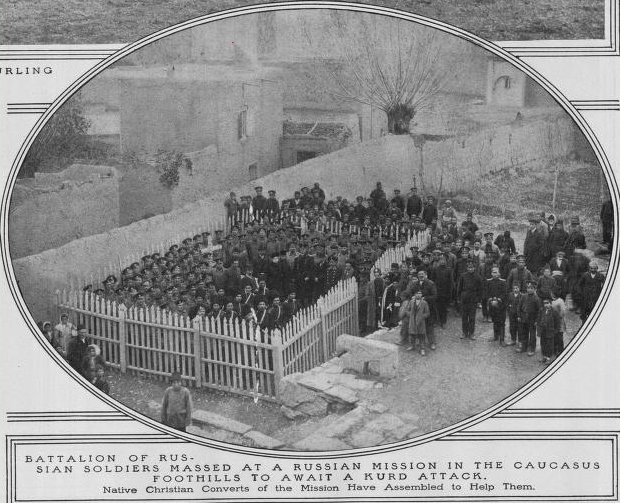
Battalion of Russian soldiers massed at the Russian religious mission in the Caucasus foothills (which is located in the Ottoman Empire) to await a Kurd attack." The detail: "The native Christian converts of the mission is ensemble to help them
Recognition 3
Kurdish newspaper apologizes to Armenian people
13.05.2005 14:31
YEREVAN (YERKIR) - On its website, the Kurdish newspaper OzgurGundem, on behalf of the Kurdish people has offered its apologies to the Armenian people for the years of silence and complicity in the Armenian Genocide, Armenpress reported, citing Marmara, an Armenian-language newspaper published in Istanbul, Turkey.
The paper has described the great suffering of the Armenian people in stunning words, Marmara wrote. It has also apologized for its reluctance to widely discuss the issue.
Recognition 4
Recognition by the People's Congress of Kurdistan
(Kongra-Gel) of Caucasus

Armenian News Network / Groong
September 13, 2004
By Onnik Krikorian

Heydar Ali is the Caucasus Representative of the People's Congress
of Kurdistan (Kongra-Gel). This interview was conducted at
the office of the Kurdistan Committee in Yerevan on 24 August 2004

OK: Isn't the problem that the term "Kurd" can also be considered a political statement?
HA: In what sense?
OK: To say that you're a Kurd can be considered a political
statement and especially in a country such as Armenia which borders
Turkey. At the same time, because of the variety of religions and
dialects that divide the Kurdish nation, the term "Kurd" also
represents an attempt to break down those divisions in a nation that
is otherwise estimated at anywhere between 20-45 million people.

HA: In that sense, Armenia's position is more favorable towards
the Kurds because 1.5 million Armenians were killed during the
Genocide. However, to deny the Kurdish identity in Armenia is a
violation of international human rights obligations but yes, you are
right. It is well known that throughout history, Kurdistan and the
Kurds have been divided and that this is a special policy conducted by
very powerful countries in the world to weaken us. The division
between Kurds and Yezidi is another manifestation of this.
Kurdish Militia in January 24 - 1915
Recognition 5 (popular cultural recognition)
Özz Nûjen, a Swedish-Kurdish comedian speaks about the problems of Turkey in swedish about Hrant Dink, the Kurds, Orhan Pamuk and the Armenian genocide. He has several times mentioned the turkish denial of the genocide and the occupied Kurdistan in national swedish public service television.
Recognition 6
Parliament of Kurdistan in Exile - 1995
129a Avenue Louise 1050 Brussels, Belgium Tel: +322-539-3033 Fax: +322-539-3887
Press Release #1
April 23, 1995
We Stand For The Brotherhood Of The Peoples Of The World In addition to the Kurds, there are Armenians and Assyrians living in Kurdistan. The invasion and occupation of their lands have adversely affected all three constituent peoples. The implementation of divide and rule policies have resulted in internal feuding. The natives of millenniums have fought one another and forced each other to migrate.
A most telling example of this policy was put into action in 1915. For a few years, we were provoked to kill one another in order to benefit our self-appointed leaders.
On April 24, 1915, the Ottoman administrators began a policy of annihilating the Armenians and the Assyrians. This was a plan long in the making, meticulously carried out with the aid of some tribal Kurds who were organized into an auxiliary force, the 'Hamidiye Alaylari' or Hamidiye Brigades, of the Istanbul government. Today, a similar force has been established, the 'Koy Koruculari' or village guards. In that singular act of brutality at the turn of the century, millions of Armenians, Assyrians, and Kurds were murdered and many more were forced to embrace the coldness of diaspora.
The policy of divide and rule has been inherited by the new Turkish government in Ankara. The same hideous crimes are now inflicted on the Kurds. At times, the Kurdish religious communities are provoked into fighting one another, as the Alevis and Sunnis do from time to time. A more sinister plan is the empowerment of an auxiliary force of mercenary Kurds to fight against their fellow Kurds who are on the side of freedom and liberty. New chapters of blood and pain, suffering and migration are written daily in the history of Turkey.
A cursory look at the history of the Ottomans reveals more about the nature of the Turkish state's practices. In Asia Minor, historians tell us, there were once vibrant societies, different languages, and various cultures. Today, there are no vestiges left of these communities. A similar policy is now in the works for Kurdistan: Some Kurds are killed, many are legally and forcibly made to become Turks, and more are forced to flee in an attempt to end the way of life which is known as Kurdistan.
As the Chair of the Executive Council of the Parliament of Kurdistan in Exile, a representative body of the Kurds in diaspora, I am urging the world public opinion not to let history repeat itself and not to remain silent to the annihilation of the Kurds.
Tomorrow is the 80th anniversary of the massacres of the Armenians and the Assyrians. Let history note that we at the Parliament of Kurdistan in Exile share the pain of the survivors and their relations. We unequivocally denounce the act and condemn the perpetrators of this inhumanity, the Ottomans and their collaborators of the Kurdish auxiliary forces. We urge you all to do the same.
Zubeyir Aydar, Chair of the Executive Council
Recognition 7
Gulan Avci - municipal council, Stockholm and former Kurdish youth association chairman in Sweden.
11 oktober 2007
Turkiet, erkänn folkmordet och lös kurdfrågan (Turkey, admit the genocide and solve the Kurdish question)
I går antog USA:s utrikesutskott en resolution om att erkänna folkmordet på armenierna utfört av den turkiska armén under första världskriget.
Resolutionen är både viktig och välkommen. Viktig därför att det själsligt ger det armeniska folket upprättelse och välkommen därför att det kan tvinga Turkiet att ta demokratiprocessen EU kräver av dem på allvar om de ska bli medlemmar i unionen i framtiden.
Både presidenten och premiärministern har fördömt beslutet i hårda ordalag och turkiska medier har piskat upp krigsstämningar på många håll i landet idag.
Massdemonstrationer har arrangerats och ikväll kunde vi på 4-nyheterna se hur demonstranter uttryckte besvikelse mot beslutet eftersom att ”det aldrig inträffat något folkmord i Turkiet”
Det finns dock en invändning till folkmordsdebatten. Jag tycker det är djupt beklagligt att inte andra kristna grupper, assyrierna, syrianerna och kaldéerna som också föll offer för folkmordet får upprättelse. De har fått kämpa i motvind och de har haft få vänner som drivit deras kamp för att uppmärksamma Seyfo (Svärdets år) (man använder ordet för att beteckna folkmordet).
Svenska regeringen har en viktig roll, de kan använda sitt inflytande i EU och FN för att driva frågan vidare. Men för att det ska ske är det nödvändigt att något händer först på hemmaplan, i riksdagen.
Turkiet har sedan republiken bildades 1923 ägnat sig åt att ändra historiebeskrivningen. Det är inte konstigt eftersom att militären alltid haft starkt inflytande över politiken. Militären bär det yttersta ansvaret för folkmordet. Tre militärkupper har ägt rum i landet och det senaste var på 80-talet.
Den turkiska regeringen har under lång tid hotat att invadera södra Kurdistan med förevändning att bekämpa PKK. Under valrörelsen i somras användes invasionshotet som ett av de starkaste propagandakorten för att lugna inhemska opinionen och militären. Det var ett sätt för AKP att visa sin styrkedemonstration gentemot militären och sända signalen till folket att de kunde skydda republikens suveränitet och folket mot yttre hot.
Valpropagandan gav bra utdelning, AKP fick uppemot femtio procent av rösterna, men nu är de pressade och måste leva upp till vallöftena. Gör inte regeringen något så kan militärledningen med stor sannolikhet utföra operationen själva och det vore förödande för regeringens auktoritet. Därför står krigstankarna uppradade vid gränsen och inväntar anfallstecken.
Landets förste president, Mustafa Ataturk var själv general och arkitekten bakom folkmordet. Men i västvärlden vill man hellre minnas honom som den store ledaren som symboliserade modernismen. Man vill komma ihåg honom som den som bildade en modern republik efter resterna av ottomanska imperiet och den som lyckades skilja religion och stat från varandra. Det finns de som har sådan förkärlek till Turkiet att de är beredda att sudda bort de mörka fläckarna i den turkiska historien.
Turkiet har alltid haft två ansikten, ett ljust och ett mörk. Det ljusa vänt mot Europa och det mörka inåtvänt som framförallt riktat förtrycket mot det kurdiska folket bland annat genom att frånta dem deras mänskliga rättigheter, massdeportera miljontals människor till turkiska storstäder i syfte att assimilera dem och skövla tusentals byar. Den antikurdiska politiken har varit systematisk och den enda frågan som enat partierna är just kurdfrågan.
Förhoppningsvis leder dagens beslut till att Turkiet förstår allvaret i det budskap man sänt dem, att de tar demokratifrågorna på allvar, erkänner folkmordet, ger kurderna deras rättigheter och låter demokratin på allvar sprida sig över hela samhället. Så länge Turkiet inte gör det borde Sverige verka för att stänga igen portarna för ett turkiskt medlemskap i EU.
The kurdish and the armenian national anthems does not have the same structure but the context is the same; nationalistic, loud and proud! The authors of the anthems is both poets, Mikael Nalbandian (1829-1866) was a writer that was largely self-educated wrote the the armenian national anthem Mer Hayrenik (Our fatherland) and Dildar (real name was Yunis Reuf) was a poet studiyng law in Kirkuk that wrote the kurdish national anthem in 1938 in a prison in west Kurdistan (iranian).
Hey enemy, the Kurdish nation is alive with its language Can not be defeated by the weapons of any time Let no one say Kurds are dead Kurds are living
Kurds are living, their flag will never fall We are the children of Medya and Keyhusrew Both our faith and religion are our homeland Both our faith and religion are Kurd and Kurdistan
Let no one say Kurds are dead Kurds are living Kurds are living, their flag will never fall We, the youth are the red colour of the revolution
Watch our blood that we shed on this way Let no one say Kurds are dead Kurds are living Kurds are living, their flag will never fall
Elder people singing their national anthem Mer Hayrenik
Our fatherland, free and independent, That has lived for centuries Calls on its children now, Free independent Armenia.
Here brother, for you a flag, That I made with my hands At nights I did not sleep, I washed it with tears.
Look at it, in three colours It is our gifted symbol. Let it shine against the enemy. Let Armenia always be glorious. Everywhere death is the same A man will only die once But fortunate is he who dies for the freedom of his nation.
Desmond Fernandes - The Kurdish and Armenian Genocides: from Censorship and Denial to Recognition?
Desmond Fernandes - The Kurdish and Armenian Genocides: from Censorship and Denial to Recognition?
Hrant Dink
Human rights activist of armenian descent, murdered in Istanbul by ultra nationalists. Hrant was a famous amoung Kurds and Armenians for his work and stands.
Orhan Pamuk
In 2005, after Pamuk made a statement regarding the mass killings of Armenians and Kurds in the Ottoman Empire, a criminal case was opened against the author.
HayKurd publishing house
Armenian Kurdish publishing in Sweden
Armenia's national hero General Andranik together with the Yezidi-Kurd Cenghir Agha.
Armenia's national hero General Andranik together with the Yezidi-Kurd Cenghir Agha. General Andranik and Cengir Agha struggled together in 1918-1920 particular in the Battle of Bash-Aparan which was a battle against the Turkish army on May 21, 1918.
Mount Ararat
The mountain that separates Armenia and Kurdistan. According to the Bible, Noah's arch stranded here.





.jpg)






 Posts
Posts