Wednesday, October 31, 2007
Ciwan Haco - Yerivan ( Yerevan )
Famous Kurdish singer Ciwan Haco from western Kurdistan, Qamishlo (Syria) sing about the capital of Armenia in Kurmancî.
Ciwan Haco is famous for his rock n roll and progressive music.

Tuesday, October 23, 2007
Holocaust denier Ahmadinejad in Armenia
 President of Armenia - Robert Kocharyan
Iranian president Ahmadinejad is currently visiting Armenia for private meetings with the Armenian president Kocharyan, Ahmadinejad will hold a speech in the Armenian parliament.
Mahmoud Ahmadinejad will also visit the Armenian Genocide memorial and the institute museum of the Armenian Genocide in the capital of Armenia and will leave Armenia tomorrow.

Today, Ahmadinejad made a symbolic speech in wich he avoided the word "genocide" in the Yerevan State University.
“Iran’s stand on the events of early 20th century in the Ottoman Empire bases on two principles, the first principle is that each nation should remember its history but face the future and this must not lead to repetition of the past. Second, Iran will always be by Armenia’s side” he said.
- Why should Germany not remember its history?
- Why was this "infringements of human rights" not a genocide?
Ahmadinejad is a holocaust denier and claims that no Jew have been killed during WW2 by Nazi-Germany.

Sunday, October 21, 2007
Turkey - fighting many battles
The U.S. genocide resolution, passed 27-21 by the U.S. House Committee on Foreign Affairs on Wednesday, states that the Armenian Genocide was conceived and carried out by the Ottoman Empire from 1915 to 1923, resulting in the deportation of nearly 2,000,000 Armenians, of whom 1,500,000 men, women, and children were killed.
Other international genocide recognition has been made from countries like France, Argentina, Vatican city but also from Kurdistan.
 Starved children during the Armenian genocide
Turkey immediately recalled the Turkish ambassador from U.S. because of the Armenian genocide bill. Since the genocide bill, the Turkish-US relation has since then been bad.
 Turkey made their first trespass today when they fired grenades over the border to Iraq.
This genocide bill comes inappropriate for Turkey just as they had plans of (for the first time officially) invade southern Kurdistan. The excuse for invading S.Kurdistan is to fight the PKK guerrilla, but its obvious that Turkey has a hidden agenda.
It is S.Kurdistan they want to crush so that the northern Kurdistan (Turkey) Kurds wouldn't start fighting again for the Kurdish lands.
The Turkish PM Erdogan has once said:
Other international genocide recognition has been made from countries like France, Argentina, Vatican city but also from Kurdistan.
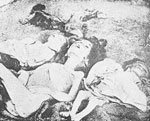 Starved children during the Armenian genocide
Turkey immediately recalled the Turkish ambassador from U.S. because of the Armenian genocide bill. Since the genocide bill, the Turkish-US relation has since then been bad.
The Turkish president Abdullah Gül warned Bush that the genocide bill would hurt the ties between the countries, now Bush warns Gül not to enter southern Kurdistan (Iraq).
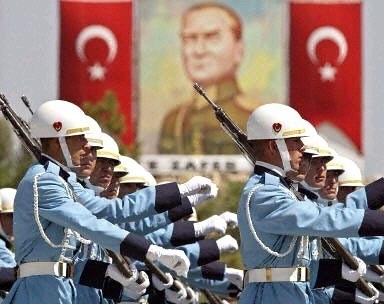 Turkey made their first trespass today when they fired grenades over the border to Iraq.
This genocide bill comes inappropriate for Turkey just as they had plans of (for the first time officially) invade southern Kurdistan. The excuse for invading S.Kurdistan is to fight the PKK guerrilla, but its obvious that Turkey has a hidden agenda.
It is S.Kurdistan they want to crush so that the northern Kurdistan (Turkey) Kurds wouldn't start fighting again for the Kurdish lands.
The Turkish PM Erdogan has once said:
"We wouldn't accept a Kurdish government, even if it was in Argentina".
Wednesday, October 10, 2007
Christians prays for Kurdistan and the Kurds
Jesus loves the Kurds

"Jesus loves us, the Kurds and wants to free us"
Pray4Kurds.com
Seven days of prayer of the Kurds
This material was found on http://centralasia.imb.org/
Exact Source


“Arise, shine, for your light has come, and the glory of the Lord rises upon you. See, darkness covers the earth and thick darkness is over the peoples, but the Lord rises upon you and his glory appears over you.”
Please take a moment to pray for the light of Christ's love to reach the Kurdish people.
Each photo is a prayer point.

For the past five centuries the Kurds of Central Asia have been forced to live under oppressive regimes and to seek refuge out of their traditional homeland. The oppression the Kurds have experienced has led many of them to believe that they are among the most hated peoples of the world. The Kurdish proverb, “Kurds have no friends,” expresses that sentiment. Despite the suffering the Kurds have endured, they remain a culturally distinct people. Please pray for the Kurdish people to find their worth and home in Jesus Christ. Pray also that God would provide redemptive friendships for the Kurds that they would come to know the Lord intimately.
 While there are an estimated 25 million Kurds throughout the world, over 5 million live in Iran. Primarily located in the northwest region, the Kurds are a marginalized group of shepherds, farmers and merchants. Kurdish children have limited access to education and many remain illiterate. Illiteracy among the Kurds creates an obstacle to sharing the gospel with them. In addition to literacy issues, the Kurds of Iran speak four different dialects of the Kurdish language, making it difficult to share the gospel of Jesus with them. Please pray that oral methods of sharing the gospel, such as audio Bibles, Christian radio broadcasts, and praise and worship music translated into the Kurdish dialects will reach the ears of Kurds in Iran.
Life for a Kurdish woman is centered in the home. As a young bride she must move into her mother-in-law's home and take on every chore—drawing the family's water, milking the family goat, preparing each meal, cleaning the house and raising the children. She often endures verbal and physical abuse from her mother-in-law and other members of her husband's family. Please pray that the hope of Jesus Christ touches the hearts and lives of these women. Pray that they will have the opportunity to feast on the Bread of Life even as they care for their families.

A small sect of religiously distinct Kurds, called Yezidi Kurds, live in the mountainous regions of Armenia. The majority of Kurds are Muslim, but Yezidi Kurds fear and worship Malaki Tawis, Satan, rather than Allah. Yezidi Kurds believe that God, as a disinterested creator, gave them over to Satan. Yezidi Kurds live their lives in fear of Malaki Tawis, to whom they make sacrifices and build monuments, like the one in the photo. To walk through life as a Yezidi, is to walk through life in spiritual darkness. Please pray that the light of Jesus Christ will pierce through the darkness. Pray that the Yezidi Kurds will put their hope and trust in Jesus.

Many Yezidi Kurd children attend schools that look like this one. The children go to school only for two or three hours each day because it is too cold in the buildings to stay any longer. Families cannot afford to send lunch for their children. Such poor conditions make learning nearly impossible. Development projects, food relief, and health education programs teach Yezidi Kurds how to help themselves, but a lack of resources prevents many communities from improving the quality of life. Please pray that God will provide resources for the Yezidi Kurds to improve their communities. Pray that God's provision for their physical needs will open many doors to share the good news of Jesus with them.

Kurdish children love to listen to stories. From an early age Kurds tell their children stories about family history, morality, and about cultural traditions. In an oral culture story-telling is an excellent way to share the gospel. Please pray that many Kurdish children will hear the story of Jesus. Pray that the children will remember the Scripture-based stories that they hear in order to share them with their families.

In Kurdish culture it is an honor to witness the slaughtering of a sheep for a meal, and it is only bestowed upon those the Kurds respect and trust. One man has gained the trust of many Kurds in Armenia by investing many years in building relationships with them. As a result, some Kurds have already accepted the good news of Jesus through the testimony of this Armenian follower of Christ. Please pray that God will provide for this Christian worker and his young family. Pray that he will continue to be welcomed into Kurdish homes throughout Armenia. Pray that he will be filled with the power of the Holy Spirit as he shares the gospel with the Kurds.

There is a small church of Kurdish believers in Armenia. These former followers of Yezidism meet together each week in village homes to study God's Word and to worship the Lord. Some of these young believers are experiencing persecution from family members and neighbors because of their new belief in Christ. Please pray that these believers will have the courage to keep meeting together and to keep sharing their faith with others. Pray that this fledgling church will flourish as a testimony to God's power and faithfulness. Pray that new churches of Kurdish believers will spring up throughout Kurdish villages in Armenia, Turkey, Iran, Iraq and Syria.

New believers need discipleship and leadership training so that they can grow in their walk with Christ. Please pray that God will raise up Kurdish men to be the spiritual leaders in their homes and churches. Pray that God will provide discipleship training for them. Pray also that the Holy Spirit will call out men to take the gospel to fellow Kurds throughout the region.

There are a few Kurdish followers of Jesus. Most Kurds are like lost sheep without a shepherd. The Muslim Kurds of Iran are among those lost sheep. Please pray for Kurdish believers in Jesus to develop a vision to share the gospel with their fellow Kurds in Iran. Pray that the Kurdish believers would be relentless in their pursuit of these lost sheep. Pray that the Kurds of Iran would recognize Jesus as the only way to salvation.
“I am the gate; whoever enters through me will be saved. He will come in and go out, and find pasture ... I have come that they may have life, and have it to the full.”
—John 10:9-10

The Kurdish people need to experience the hope of the life-giving message of Jesus Christ. The Lord desires that all Kurds come to know Him. Pray that God would be glorified among the Kurds of Armenia, Turkey, Iran, Iraq and Syria. Pray that the Kurds themselves would become advocates for the gospel of Christ throughout the world.
Friday, October 5, 2007
Kurdish and Armenian communism
ASALA is short for Armenian Secret Army for the Liberation of Armenia and PKK is short for Partiya Karkerên Kurdistan, the Kurdistan working party. Both this organisations is classified as terrorists, both the organisations ideology was founded on Leninst Marxism.
 PKK
PKK  ASALA
ASALA
In the year of 1980 these organisations held a press conference, there they declared and made they're cooperation public in Sidon. The cooperation lasted until 1983 when ASALA disappeared in the Lebanese Beqaa Valley that PKK established its camps.
Later on, the cooperation between PKK and ASALA became stronger until the end of the 90´s when the PKK leader Abdullah Öcalan was captured.
 PKK
PKK  ASALA
ASALALater on, the cooperation between PKK and ASALA became stronger until the end of the 90´s when the PKK leader Abdullah Öcalan was captured.
Sunday, September 30, 2007
Video 3 - Kurds from Hayastan visits southern Kurdistan
Yezidi Kurds from the Kurdish diaspora in Armenia visits Lalish in southern Kurdistan 2006. The video is in Kurmancî andthe video is from Ezditv.ru.
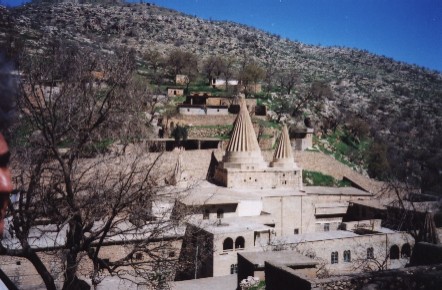 Towers of Lalish
Kurdish pre-Islamic religion is a small mountain valley situated in Iraqi Kurdistan, about 60 km north-West of the city of Mosul. Lalish is the location of the tomb of Sheikh Adi ibn Musafir, reformer of the Yazidi.
Saturday, September 29, 2007
Video 2 - Lecture about Kurds in Armenia and Caucasia
Lecture about the Kurds in Armenia and in the rest of Caucasia (in the northern Kurdish dialect Kurmancî)
Thanks to Kurdistanwebb (FiratwebbTV)
 Prof. Dr Celîlê Casimê Celîl speaks about the Kurds in Armenia and Caucasia, he has studied in Yerevan in almost 10 years but also in St. Petersburg. He currently lives in Austria
He speaks Kurmancî, Turkish, Lithuanian, Armenian and German.
Thanks to Kurdistanwebb (FiratwebbTV)
 Prof. Dr Celîlê Casimê Celîl speaks about the Kurds in Armenia and Caucasia, he has studied in Yerevan in almost 10 years but also in St. Petersburg. He currently lives in Austria
He speaks Kurmancî, Turkish, Lithuanian, Armenian and German.
Thursday, September 27, 2007
Video 1 - Kurdish women from Hayastan
A Kurdish women from the capital of Armenia, Yerevan speaks about Kurdistan, Armenia, religion, politics and other subjects in Kurmancî.
The following days, Kurdistan and Hayastan will publish video material about the Kurds in Armenia and other Yezidi Kurdish material.
The situation of the Christians of Kurdistan discussed in Italy.
 Adnan Mufti, the speaker of KRG (Kurdistan Region Government in southern Kurdistan) discussed the Christian situation with Vatican officials while visiting the Vatican were he was received by Fernando Felony, deputy of the Pope for general affairs and Mr. Manbarty, Vatican foreign minister. Adnan delivered salutations of people of Kurdistan including all its components from Moslems, Christians and Ezdies to Vatican people.
 Adnan Mufti
The spokesman of KRG assured the deputy of the Pope that in Kurdistan region demands of Christians and all the other religious sects officially are respected and appreciated.
Sunday, September 23, 2007
Kurdistan or Karabakh?
Armenians - refugees from Iraq prefer Kurdistan to highland Karabakh
 or
or ?
?The absence of conditions for the safe life is the basic reason of the emigration of Armenians from Iraq, with the change of power in Iraq of 18 thousand Armenians, this country left about 3 thousand Armenians. On this, as transmits correspondent IA regnum, stated on 30 March at the encounter in the scientifically- educational fund For "noravank" in Yerevan the chapter of the Armenian central national administration of Iraq Paruyr Of akopyan.
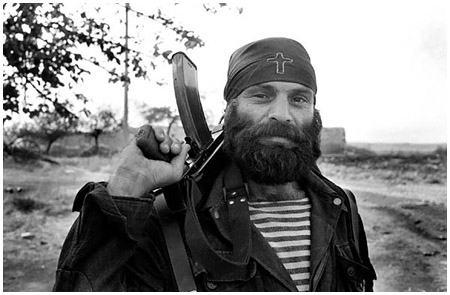 Frontline, Republic of Nagorno Karabakh © Edmond Terakopian 1994
According to him, only to Armenia emigrated from 600 to 700 Armenians from Iraq, about 1,5 thousand. - into adjacent Syria, Jordan and other countries. At the same time, noted Akopyan, is noted the migration of Armenians into the northern part of Iraq - Kurdistan. Here they feel themselves in the greater safety, since Kurdistan has internal autonomy. He emphasized that the authorities of Armenia cared that the Iraqi Armenians could settle in highland Karabakh, where they will ensure them with the dwelling also of scotomas. However, according to the chapters of the Armenian community of Iraq, which was accustomed to live in the large cities Armenians, do not experience special enthusiasm with this prospect. "they more greatly are aimed at THE USA and Europe, and if we obtain visa would be then not complicatedly, migration was more", it noted. "in Kurdistan it is considerably better than in the same Karabakh, since it is economically more developed, it has large petroleum reserves, are more developed universities", noted Akopyan.
Translated from Russian to English from the page Regnum.ru
Pictures is added from Kurdistan and Hayastan
Monday, September 17, 2007
Christianity in Kurdistan
 A Kurdish bible in Soranî
Armenia was the first nation in the world that adopted Christianity, the first Christian state in history. St. Gregory was the one that influenced Armenia to adopt Christianity in the year of 301 CE.
The Christians in Kurdistan is mainly the Assyrians and the Armenians, when it comes to the Kurds they are Nestorian Christians.
There is also a Kurdish bible in both Kurmancî and Soranî and it is also available on the Internet:
You can read more about Christianity in Kurdistan on the first post published on this blog:
Beautiful Christian music in Kurdish
Friday, September 14, 2007
Nûra Cewarî - author from Armenia
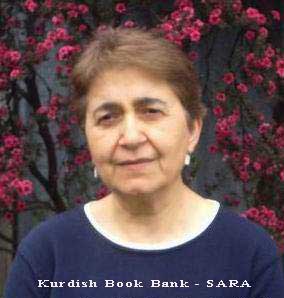 Nûra Cewarî is a kurdish author from the former Soviet Armenia, born in 1941 in the capital of Armenia - Yerevan. She is currently living in Melbourne in Australia.
Her mother worked at Radio Yerevan and after college, Nûra started to work in the Music highscool of Yerevan in 1960 and in 1967 she started as an aspirant in the Institute of Academic Artist of Armenia and from there, her career started.
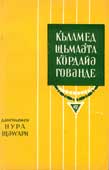 "Kilamêd cimeta Kurdaye govendê", published by Nûra in 1960
Friday, August 31, 2007
Meryem, the Kurdish singing Armenian
This information has never been revealed before, it is information from Meryem Xan´s own relatives about her heritage.
 Meyrem, or Maria as she would be named in west was actual Armenian amoung Kurds.
Meyrem Xan was adopted during the genocide, Emin Ahmet Aga adopted her
he was from a big and rich family, the family noticed that Meyrem Xan
sang very sadly but still beautiful and also creating her own music,
she was also writing her own lyrics. They heard that her songs
was working on a problem, that she was going through a trauma.
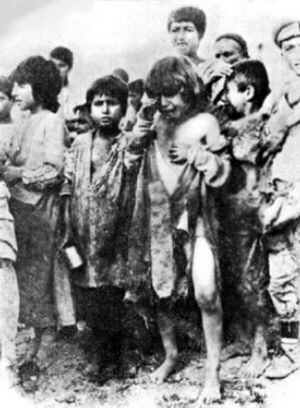 It was common that locals bought a christian orphan children from the Ottoman armies, it can be discussed if it is considered saving the life of a child or not.
Actually "adoption" during the genocide means that someone purchased
a christian child, she was born in the tumults in 1904 and lived
through the genocide as an child and youth.
Meyrem was only singing about the family and her new home, about the mountains,
about their village in Botan (Besîr) - Her singing style was a Besîrî style
 A black/white photo of Meyrem.
When the LP technique was modern in all of middle east she went to Armenia and sang
in Denge Erivan and later on in Radio Baghdad where other famous Kurdish artists
had been like Nesrin Serwan, Ayse San and Gulbehar.
She was 45 when she passed away in 1949 in Baghdad, Iraq.
Sunday, August 26, 2007
The madness continues
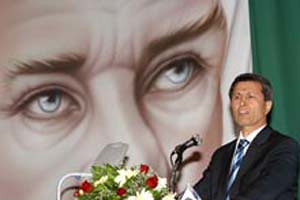
The same professor from the Turkish historical society (TTK), Dr Yusuf Halacoglu that stated that Alevi Kurds was Armenians and that Kurds was actually Turks has now said that PKK (the Kurdish workers party) is not a Kurdish movement, but assimilated-Armenians that consider themselves Kurds.
"Armenian. Most of the members included in the PKK, which wants
to split the country, and the "Turkish Workers' and Peasants'
Liberation Army"
He has in another interview said that"...when some PKK members are arrested it becomes
apparent that they are not circumcised.”
Halacoglu has been condemned by the Turkish priminister Erdogan that
accused him of racism, leaders of the Kurdish "Democratic Society"
organization and also by many Alevi organizations.
The Alevi, Reha Camuroglu, the AKP deputy (ruling
Justice and Development Party) has also asked asked
Halacoglu to resign from his office yesterday and the
Ankara public prosecutor initiates an investigation over
Halacoglu. Yusuf Halacoglu comments this in a
pressconference and said:"I did not reject [the existence of] Kurds, I said the following:
'Some who believe themselves to be Kurds are shown as
Turkmens in 16th century records. Is that saying there are
no Kurds? I [also] did not say that Kurdish Alevis are Armenians.
There are Armenians who pretended to be Kurdish Alevis in
order to escape the forced emigration. Being is different,
pretending to be is different."

Friday, August 24, 2007
Alevi Kurds = Armenians ?
Prof. Dr. Yusuf Halaçoglu from TTK (Turkish Historical Society) has stated
that "Kurds are actually Turkmen and that the Alevi Kurds are actually
Armenians".
 Yusuf Halaçoglu is the leading genocide denier in Turkey
"I do not speak without evidence. Some may prefer
making noisy arguments, but I do not make statements
without conducting studies. Professors bury their
heads in the sand."
Halacoglu also claims that many Turks became Kurds
due to the feudal structure of Ottoman society in the
16th century. Alevis, too, harshly reacted to
Halacoglu's remarks that `Alevi Kurds are actually Armenians.'
Yusuf Halaçoglu says that many Armenians identified
themselves as `Kurdish Alevis' in an attempt to save
themselves from the genocide, or as he self says the forced
migration of Armenians in 1915 to avoid a genocide label
on the nation.
This was found on the TTK´s homepage:
"Turkey should fight against this unjust and
biased legislation and try to prevent the genocide
label from being attached to the nation. Otherwise,
those Turkish children who read in textbooks that
their ancestors were murderers will suffer an
inferiority complex and will become asocial in the
countries in which they live."
Some of the Turkish security experts had claimed
that the PKK party is an Armenian terrorism and it
has been strong in the Armenian donmes region.
Justin McCarthy
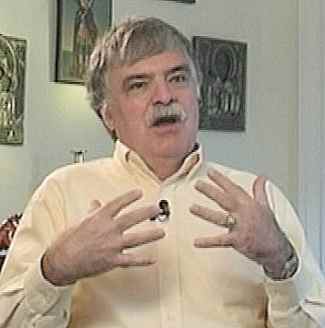
Halacoglu together with the American Prof. Justin McCarthy is the
front figures in the genocide denial movement.
Subscribe to:
Posts (Atom)

 Posts
Posts